


Apr 23, 2026 875 views
Sangohachi – Organic Cafe in Himeji | Enjoy a healthy lunch made with organic ingredients! Vegan options available


Just two stops from JR Himeji Station toward Kobe, “Sangohachi” is an organic café located right outside the ticket gates at JR Otsuki Station, built around the concept of being an “organic junkie.” Committed to using only additive-free and organic ingredients—from seasonings to main ingredients—the café creates innovative dishes that even Japanese diners find surprising, achieved through the creative use of koji, an essential ingredient in Japanese cuisine. Two lunch options—one plant-based and one animal-based—are available, so couples with different dietary preferences can visit together without any worries!
・Direction to Sangohachi
Get off at JR Gochaku Station and walk for about 1 minute.
Take a local train heading toward Kobe from JR Himeji Station. It’s two stops away. The train ride takes about 6 minutes, and you’ll arrive at Gochaku Station.
・A café with an “organic junkie” concept
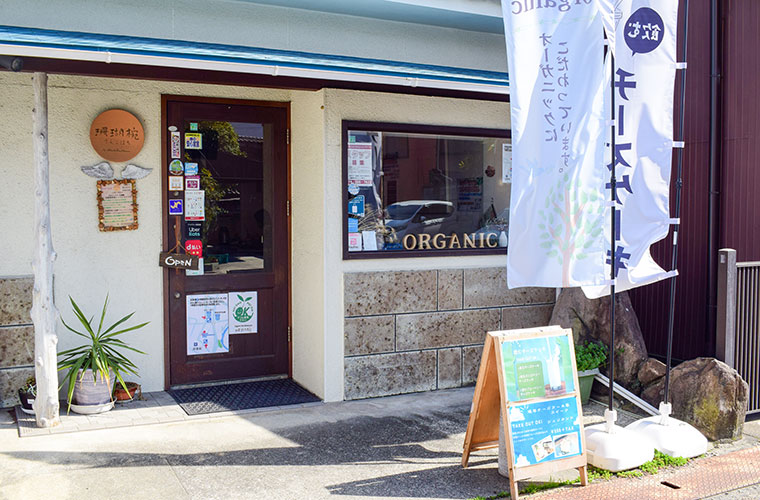
Exit the ticket gates at JR Gochaku Station and walk straight down the street in front of you. You’ll find “Sangohachi,” with its blue roof, on your left. Popular with both men and women, this organic café attracts repeat customers from far and wide, particularly those who care about their diet and health. Since it’s a bit removed from downtown Himeji, it remains a hidden gem not yet widely known among foreign tourists.
The concept is “Organic Junkie.” From lunch through dinner, you can enjoy “body-friendly junk food” created with a deep commitment to organic vegetables and seasonings, combined with innovative ideas.
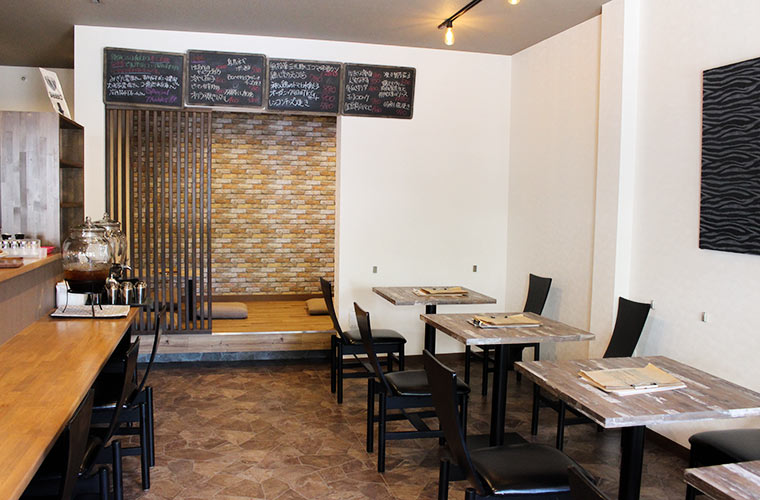
Inside, in addition to counter and table seating, there is a tatami room in the back where you can take off your shoes and stretch out your legs. It has a semi-private feel, making it ideal for dates or families with children.
・”Weekly Lunch Special” with vegan or non-vegan options
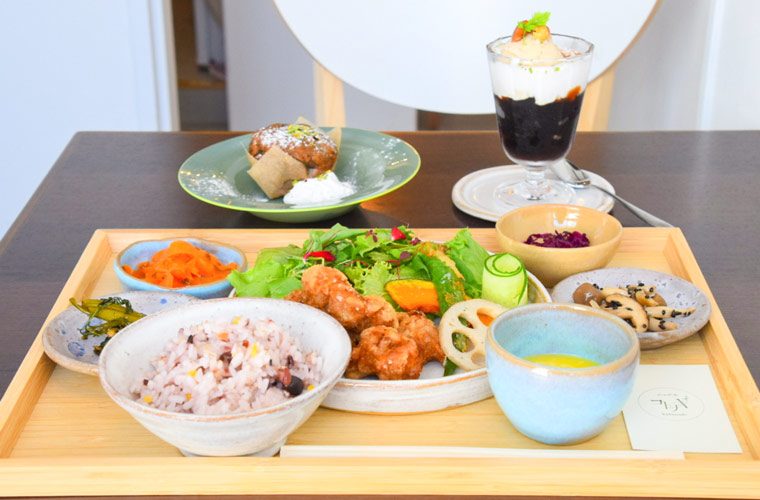
『Weekly Lunch Special (A)』2,310 yen
The lunch menu features a variety of options, including the ‘Weekly Special Lunch’ (with a new main dish every other Tuesday), the ‘Soup Lunch’ made with Japanese-style dashi broth, and the ultimate tamago kake gohan, the ‘Organic Egg TKG Lunch’ (each 1,210 yen).
The “Weekly Special Lunch” offers two main course options, A and B, with one of them being a vegan dish that contains absolutely no dairy, eggs, or meat. It’s great that you can order this as the “Evening Lunch” (2,750 yen) even after lunch hours, so you can enjoy it anytime.
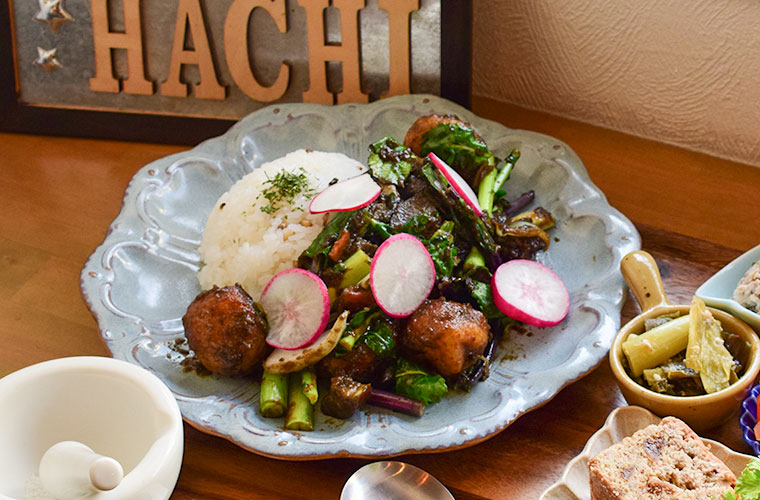
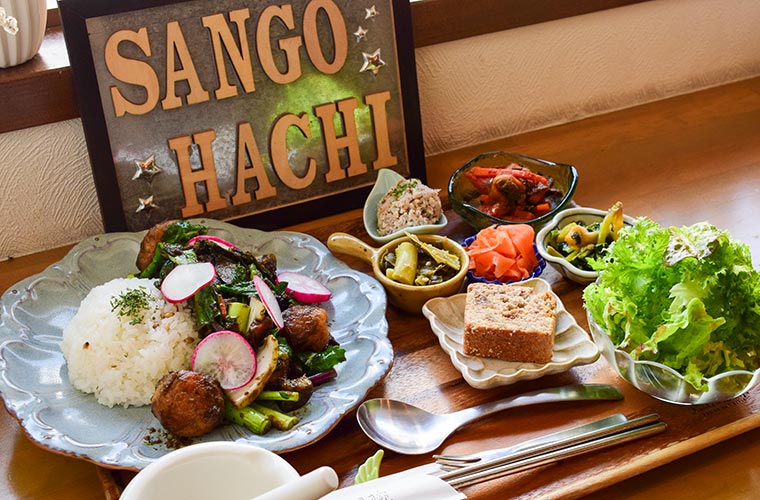
On the day of our visit, the main dish was “Vegan Ga Pao Rice.” Replacing ground meat with daikon radish cakes—handmade one by one using grated daikon and potato starch—this dish is incredibly satisfying. The chewy texture of the daikon cakes is truly addictive.
The dish is seasoned with a fermented fruit sauce made from a unique blend of locally grown tropical “feijoa” fruit and Japanese plums. The slightly tart sauce blends perfectly with the ingredients, creating a flavor that makes the rice go down a treat.
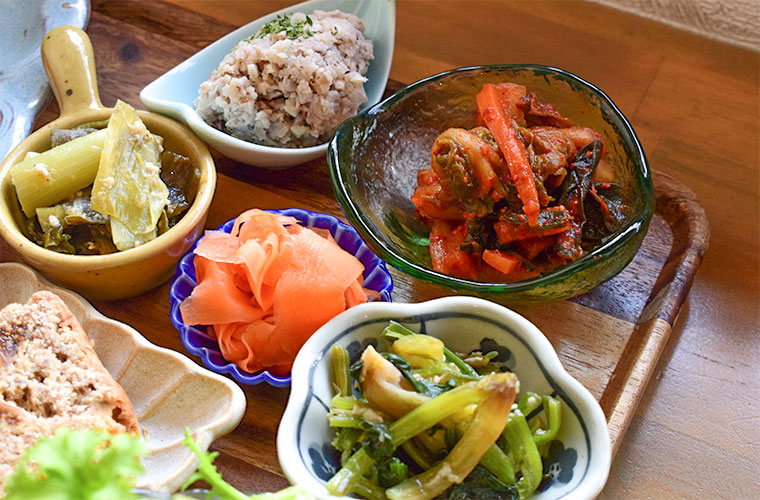
The side dishes are also richly seasoned, with a meticulous attention to detail evident in every aspect—from avoiding sugar and soy sauce to handcrafting seasonings using naturally cultivated koji, vegetables, and fruits. Their sugar-free kimchi is a particular point of pride—a uniquely addictive dish made with homemade garlic koji.
Furthermore, they source only organic, pesticide-free, and naturally grown vegetables directly from local farmers, ensuring unparalleled freshness! Be sure to notice the crisp, crunchy texture as well.
・Handmade barley flour pound cake makes a great souvenir!

『Barley Flour Pound Cake (Vegan Cocoa Nibs *No White Sugar)』528 yen / loaf
The “Barley Flour Pound Cake,” served as a mini dessert with lunch, comes in nearly 20 different flavors. To accommodate different dietary preferences and health needs, they offer two types: one with white sugar and one sugar-free. They also sell individual cakes for takeout, and since they keep for about 10 days, they make the perfect souvenir.
Barley flour isn’t just gluten-free—it’s also low in sugar and packed with dietary fiber, which is a major plus. In addition to using wholesome ingredients like free-range eggs, cane sugar, and coconut oil, they actively incorporate superfoods like cacao nibs and chia seeds into certain flavors to enhance nutrition, texture, and flavor.
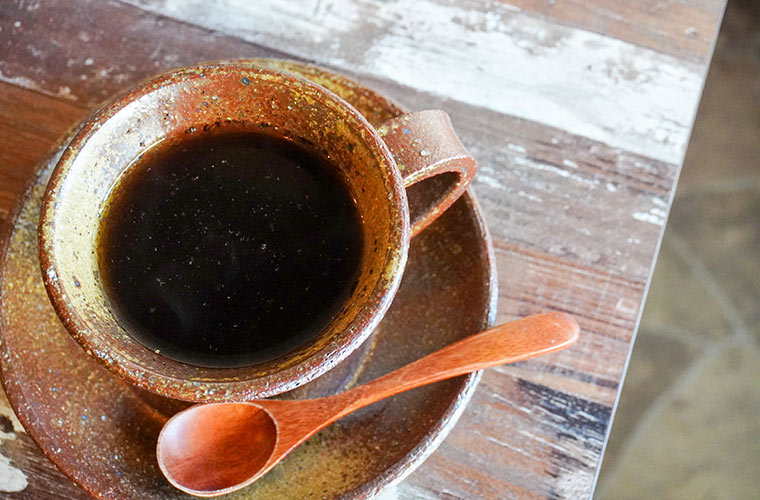
『Black Ginger (Brown Rice Coffee)』660 yen
Another signature drink at this shop is the brown rice coffee, made by roasting organically grown brown rice over two days using traditional Japanese Nanbu ironware and Bincho charcoal—considered Japan’s finest.
The flavor is packed with ingredients and tools unique to Japan, along with meticulous craftsmanship. It has more astringency than brown rice tea but less bitterness than coffee, resulting in a light and refreshing taste that’s easy to drink for people of all ages.
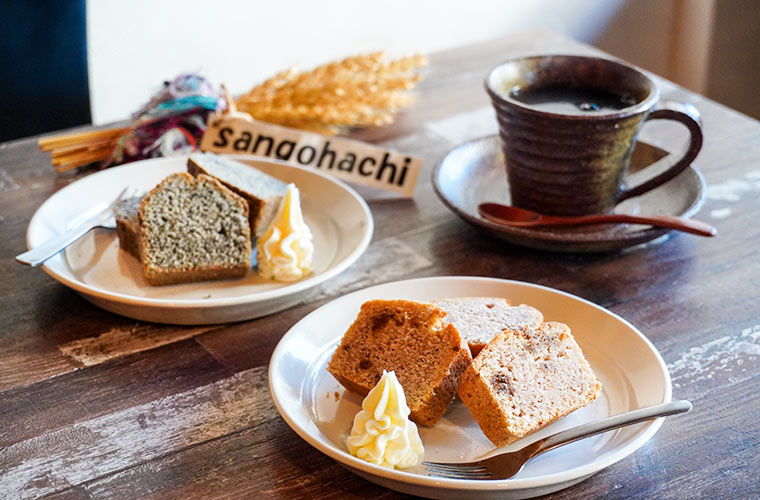
“Sanagawan” offers a selection of dishes and sweets—available only here—that combine body-friendly ingredients with creative ideas. Why not treat yourself to a special café experience that nourishes both body and soul?
■Information
DATA
Sangohachi


- Yes
- No
-
English Menu

-
Wi-Fi

-
to go

-
Parking

- 注意事項
*Reservations are accepted by phone
- Business hours
- Tuesday–Friday: 11:30 a.m. – 10:00 p.m. (Last order at 9:00 p.m.)
Saturday: 9:00 a.m. – 10:00 p.m. (Last order at 9:00 p.m.)
Sunday and Holidays: 9:00 a.m. – 5:00 p.m. (Last order at 4:00 p.m.)
- Regular holiday
- Monday (Open on holidays; closed the following Tuesday)
- Cash
- Cash / PayPay
- TEL
- 079-255-7622


This article is current as of Apr 15, 2026. It may differ from the latest information.
TOP 5
-
 1
1
Gourmet
cafe Kotonaki - 100% Vegan Cafe in Himeji | Vegetable-packed lunches, healthy sweets, and takeout available!
-
 2
2
Gourmet
il riccio - Plant-Based Café in Himeji | Savor a seasonal lunch with fresh vegetables! An organic food shop is also attached
-
 3
3
Gourmet
Senhime Chaya - Japanese Restaurant near Himeji Castle|Famous giant whitebait rice bowls and Halal options available
-
 4
4
Gourmet
Sakura Saku - Traditional Japanese House Café in Himeji | Authentic Japanese home-style cooking with deep dashi flavors! Vegan options available.
-
5
Gourmet
Sangohachi - Organic Cafe in Himeji | Enjoy a healthy lunch made with organic ingredients! Vegan options available


